
HRV Installation in Cambridge, Ontario
Prolific Mechanical installs heat recovery ventilators (HRVs) in Cambridge homes to deliver fresh, filtered air while recovering up to 80% of outgoing heat energy. Our licensed technicians size, duct, and commission HRV systems for both new construction and retrofit projects.
HRV Installation Services in Cambridge
Tight homes need mechanical ventilation. Newer builds in Champlain and south Cambridge meet current Ontario Building Code airtightness standards, and older homes in Preston and Hespeler that have received new windows, insulation, or air sealing are often much tighter than their original construction intended. Without mechanical ventilation, cooking moisture, shower humidity, and occupant breathing push indoor humidity above safe levels in winter, causing condensation on cold surfaces and creating conditions for mould growth.
An HRV exhausts stale, humid indoor air and replaces it with fresh outdoor air while a heat exchanger core transfers 70 to 82% of the outgoing heat to the incoming stream. In Cambridge's climate, where January temperatures average -7°C with regular dips to -20°C, that heat recovery makes a significant difference compared to simply cracking a window. Heritage homes in Galt that have been renovated with modern insulation and windows are common candidates for HRV installation, since their tighter envelopes trap moisture that used to escape through drafts. We install HRV systems across all Cambridge neighbourhoods for both new builds and existing homes.
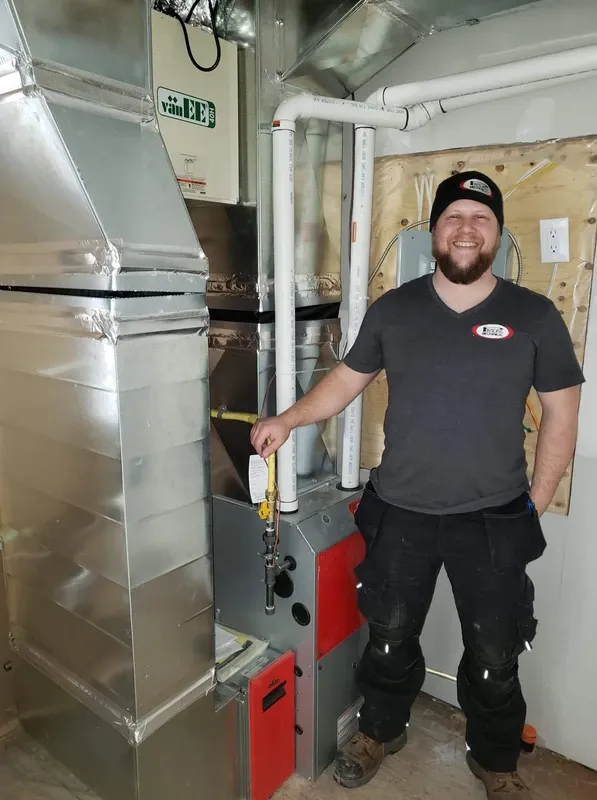
Do it right.
The first time. Every job backed by our workmanship guarantee.
HOW OUR PROCESS WORKS
Call or Book Online
Describe your hrv installation needs and we will schedule a visit, often same-day for emergencies. Call 519-729-1456 or use our online form.
Professional Assessment
A licensed technician arrives at your Cambridge property with diagnostic tools, assesses the situation, and provides transparent pricing before any work begins.
Problem Solved
We complete the work to the highest standards, test everything, and don't leave until you're completely satisfied.
PROLIFIC MECHANICAL REVIEWS
From Our Valued Clients
"Prolific Mechanical was fantastic. Quick response, fair pricing, and the technician explained everything clearly. Our furnace was back up and running the same day."
"Tom and his team installed our new AC unit and it works perfectly. Very professional, cleaned up after themselves, and the price was exactly as quoted."
"We had an emergency with our furnace on a cold January night. Prolific came out within hours and fixed the issue. Can't recommend them enough."
New Construction and Retrofit Options
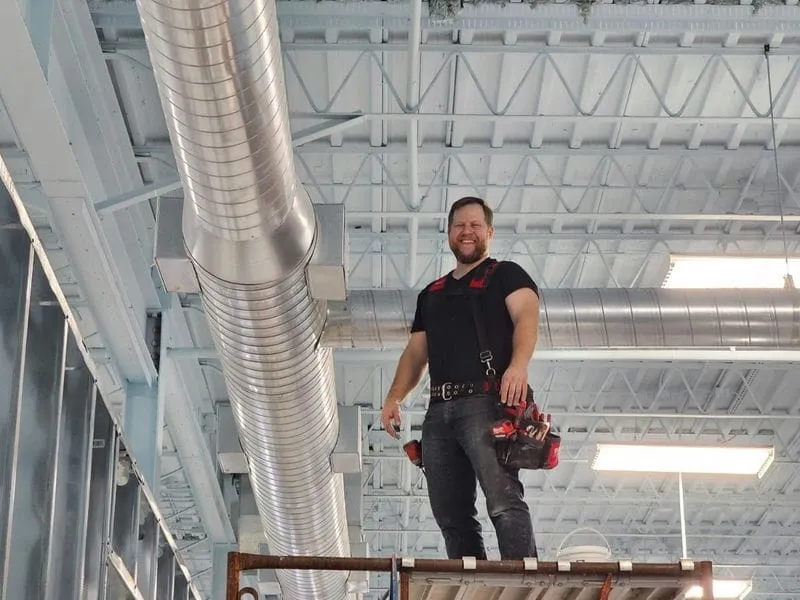
In new construction, HRV ductwork is installed during the framing stage with dedicated supply and exhaust runs to every bedroom, living area, bathroom, and kitchen. This is the ideal setup: balanced airflow to each room, quiet operation, and no reliance on the furnace blower. Ontario Building Code requires mechanical ventilation in all new homes.
Retrofit installations in existing Cambridge homes take a different approach. In homes with forced-air heating, we often connect the HRV's fresh air supply to the furnace return duct and run dedicated exhaust ducts from bathrooms and the kitchen. For post-war bungalows in Preston and Hespeler, we can run a fully ducted system through the basement ceiling with minimal disruption to finished spaces above.
Properly Sized and Balanced for Your Home
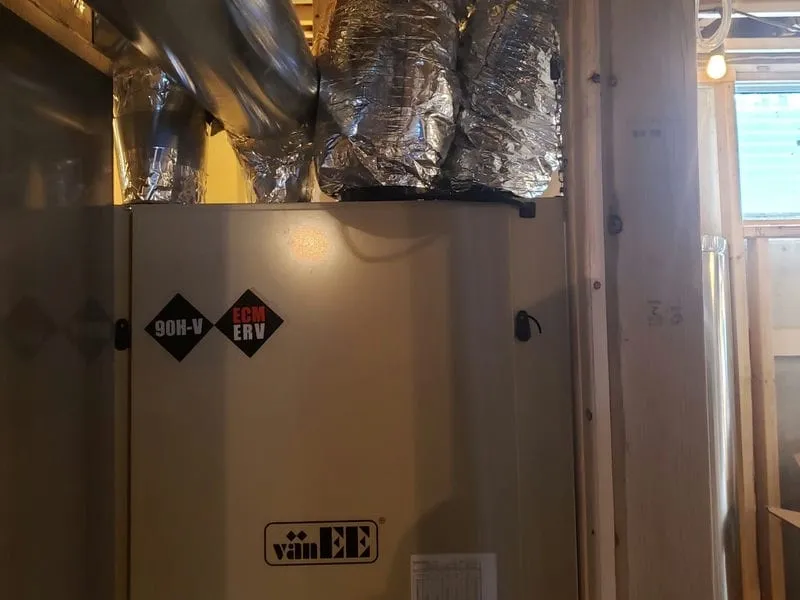
HRV sizing is based on the number of bedrooms, floor area, and occupancy as required by Ontario Building Code. A typical three-bedroom Cambridge home needs 50 to 80 CFM of continuous ventilation. A home with four occupants, a gas stove, and a main-floor laundry produces more moisture than a two-person household and requires higher capacity.
After installation, we balance airflow at every supply and exhaust point using calibrated measurement tools. Balanced airflow is what separates a properly commissioned HRV from one that creates drafts, noise, or uneven ventilation. Homes near the Grand River in Galt and Preston may experience higher baseline humidity levels, making properly commissioned ventilation even more important for controlling indoor moisture.
What to Expect During Your HRV Installation
Site Assessment
We evaluate your home's airtightness, existing ventilation, ductwork layout, and moisture levels. We determine the optimal HRV location, duct routing, and exhaust pickup points for bathrooms and kitchen.
Installation
We mount the HRV unit, core-drill exterior wall penetrations for supply and exhaust hoods, run insulated ductwork to each pickup point, and wire the unit to a wall-mounted controller. Retrofit installations typically take one to two days.
Balancing and Commissioning
We measure airflow at each supply and exhaust point, adjust dampers to deliver balanced ventilation to every connected room, and verify the heat exchanger is operating at its rated recovery efficiency.
Walkthrough and Maintenance Review
We explain the controller settings, demonstrate filter removal and cleaning, review the seasonal maintenance schedule, and answer your questions about operating your HRV through Cambridge's heating and cooling seasons.
FREQUENTLY ASKED QUESTIONS
Do I need an HRV in my Cambridge home?
If your home was built or significantly renovated in the last 15 to 20 years, it is likely tight enough to benefit from an HRV. Newer subdivisions in Champlain and Langs Farm almost certainly need one. Signs you need an HRV include persistent window condensation in winter, musty or stale odours, bathroom mould, and a stuffy feeling that improves when you open a window. Heritage homes in Galt that have been sealed up with new windows and insulation also become strong candidates.
Is an HRV or an ERV better for a home in Cambridge?
In Cambridge's cold, humid climate along the Grand River, an HRV is the standard recommendation. HRVs transfer heat between airstreams without transferring moisture, which is ideal for winters where indoor humidity tends to be high and you want to exhaust that excess moisture outdoors. This is especially true in Galt and Preston where river proximity keeps humidity elevated. ERVs transfer both heat and moisture, which suits drier climates. Most occupied Cambridge homes do better with an HRV.
Can an HRV help with humidity problems near the Grand River?
Yes. Homes in low-lying areas of Galt and Preston near the Grand River can experience higher baseline humidity. An HRV continuously exhausts moist indoor air and replaces it with drier outdoor air during winter, helping to control condensation on windows and prevent mould growth in closets and exterior wall cavities. The heat exchanger core recovers most of the outgoing heat energy, so you get fresh air without significant energy loss.
How long does HRV installation take in an existing Cambridge home?
A retrofit HRV installation typically takes one to two days, depending on the home layout and number of exhaust pickup points. In Preston and Hespeler bungalows with unfinished basements, we can usually run a fully ducted system through the basement ceiling in a single day. Heritage homes in Galt with finished basements and limited access may take two full days. A simplified installation connecting to existing furnace ductwork is faster but delivers less precise ventilation to individual rooms.
RELATED SERVICES IN CAMBRIDGE

READY FOR A FREE ESTIMATE?
Schedule your free, no-obligation estimate for hrv installation in Cambridge. Licensed technicians ready to help.